March 8, 2026: Can you move your leg without moving your back?
Hi friends,
In just about every person I evaluate in the clinic with low back pain, I see the same movement flaw.
They can't extend their hip (bring their leg behind them) without their lower back taking over.
Here's a simple test. Stand next to a mirror or record yourself from the side. Slowly bring one leg straight behind you while keeping your torso upright. Watch where the movement comes from. Is it mostly from your hip? Or does your lower back arch and rotate?
Your hip is one of the most mobile joints in your body, designed to move freely. Your lower back has relatively limited motion and is built for stability, not mobility.
When you walk, run, or squat, most movement should come from your hips. Your lower back should stay relatively quiet and stable.
But when you can't separate hip movement from lower back movement, your spine starts compensating. Over time, this excessive motion places repetitive stress on your discs, ligaments, and joints, eventually leading to pain.
Even if you don't have back pain now, this pattern can set you up for problems down the road.
The fix is learning to engage your core to stabilize your spine while your hip moves independently. My favorite exercise to retrain this pattern is simple, and you can do it at home.
Lie on your stomach with a pillow underneath your hips. Engage your core to keep your spine neutral. To find neutral, fully arch your lower back, then round it in the opposite direction. Neutral is the comfortable middle point.
Bend one knee to 90 degrees. Slowly lift your thigh off the floor while keeping your lower back completely still.
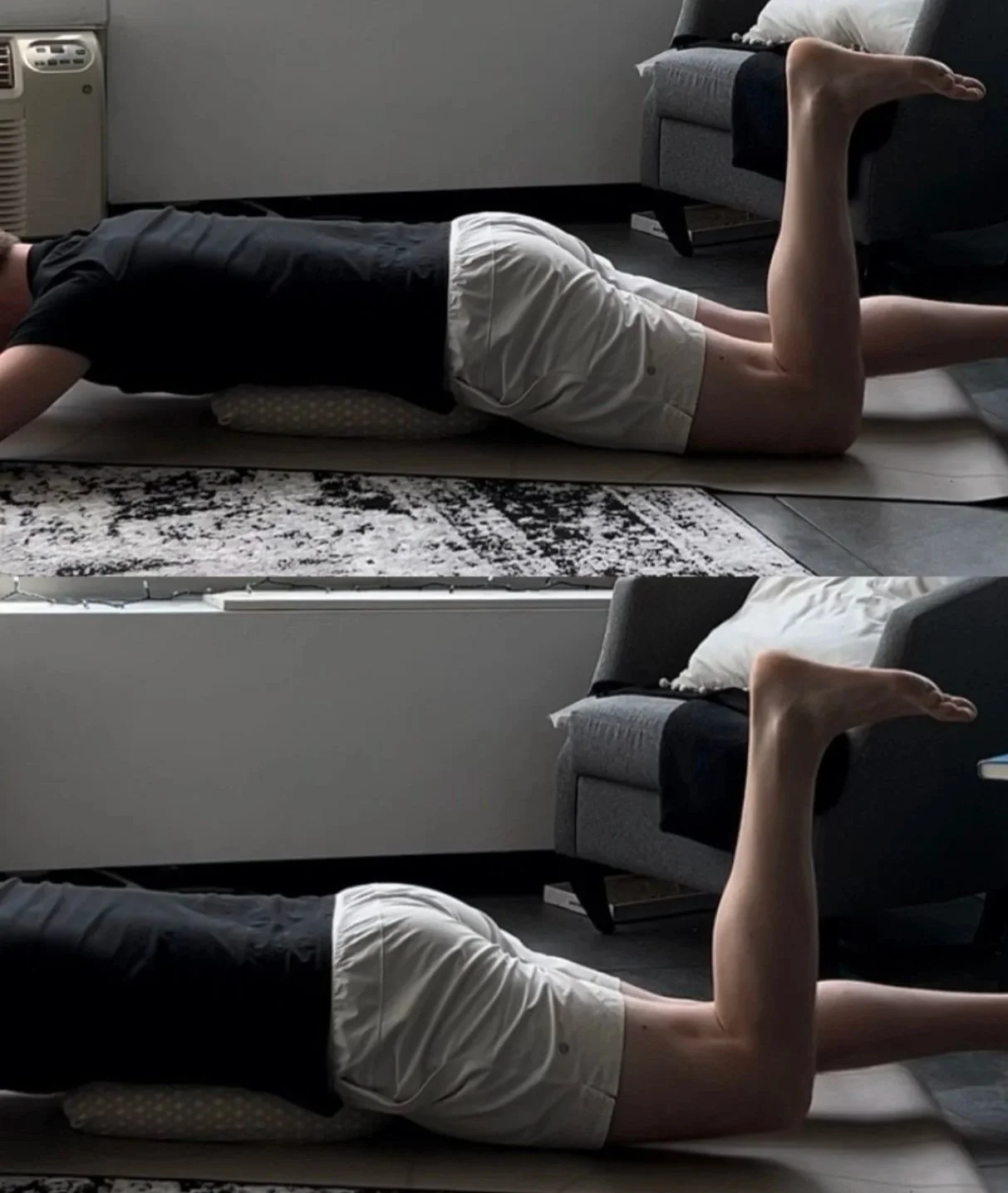
The movement is very small—maybe an inch or two. Focus on squeezing your glute, not arching your back. If your back moves, reset and use less range of motion. Repeat 10 times on each side daily.
You're teaching your brain a new pattern where your glutes do the work while your core keeps your spine stable.
Your glutes are the most powerful muscles in your body. They should be the primary drivers when you walk, run, or climb stairs—not your lower back.
When you retrain this movement pattern, you're building a foundation for pain-free movement that will serve you for decades.
Quality movement habits now set you up for a long, healthy, and active life later.
Until next week,
Kevin
✍️ Quote I’m reflecting upon
“Nobody is in charge of determining how we feel. That is 100% up to us.”